Drop forging is one of the most trusted and widely used metal forging methods in modern manufacturing. Known for producing high‑strength, precision‑shaped components, this process plays a critical role in industries where durability, safety, and performance are non‑negotiable.
If you’re wondering what is drop forging, how it works, and why manufacturers rely on it for critical components, this in‑depth guide will walk you through everything — from the working principle and types to advantages, comparisons, and real‑world applications.
What Is Drop Forging?
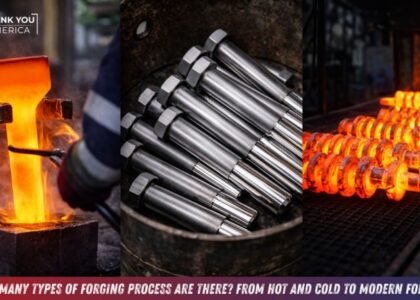
Drop forging is a metal forging process in which heated metal is shaped by repeatedly striking it between two dies using a hammer or mechanical force. The term “drop” comes from the hammering action, where a heavy ram is dropped onto the workpiece to force the metal into the desired shape.
When people ask what is drop forging, the simplest answer is this: it is a forging technique that uses impact force to create strong, reliable, and dimensionally accurate metal components. The repeated blows refine the metal’s internal grain structure, resulting in parts that are significantly stronger than cast or machined components.
Drop forging is commonly used to manufacture tools, automotive parts, industrial fasteners, and heavy‑duty components that must withstand high stress and load conditions.
How the Drop Forging Process Works
To fully grasp the process, it helps to look at how drop forging is performed on the shop floor. Although tools and capacity can vary, the basic steps stay largely the same.
Step‑by‑Step Drop Forging Process
- Heating the Metal
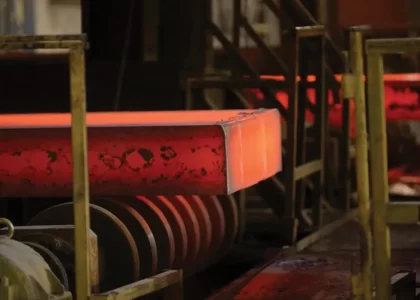
The raw metal billet or bar is heated to a forging temperature, making it soft and malleable. This allows the metal to flow easily into the die cavity. - Placing the Workpiece
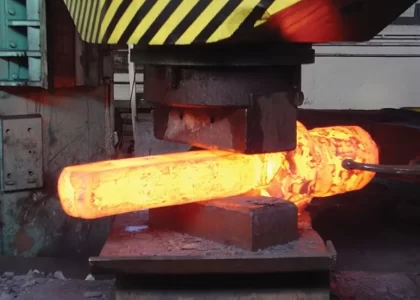
The heated metal is positioned between the upper and lower dies, which are pre‑shaped to match the final component design. - Hammer Impact (Drop Action)
A hammer or ram is dropped repeatedly onto the metal, forcing it to conform to the die shape. Each strike improves detail, density, and strength. - Trimming and Finishing
Excess material (flash) is trimmed, and the forged part may undergo heat treatment or surface finishing for improved performance.
This controlled yet powerful process is what makes drop forging ideal for parts that demand strength, consistency, and long service life.
Types of Drop Forging
To fully answer what is drop forging, it’s important to explore its different types. Each type is suited to specific applications based on part complexity, volume, and material.
Closed Die Drop Forging
Closed die drop forging uses shaped dies that completely enclose the metal. This method offers excellent dimensional accuracy and surface finish.
Key features:
- High strength and repeatability
- Minimal material waste
- Ideal for complex shapes
Open Die Drop Forging
In open die drop forging, the metal is compressed between flat or simple dies. This method is commonly used for large, simple components.
Key features:
- Flexible sizing
- Suitable for heavy parts
- Lower tooling cost
Impression Die Forging
This is a variation of closed die forging where multiple impressions gradually shape the metal. It allows better control over grain flow and final geometry.
What Is Drop Hammer Forging?
Drop hammer forging is a specific type of drop forging where a gravity or power‑driven hammer delivers the impact force. It is widely used for producing medium to high‑volume components with consistent quality.
When manufacturers ask what is drop hammer forging, the answer lies in its ability to deliver precise energy control while maintaining excellent mechanical properties.
Advantages of Drop Forging
One of the primary reasons manufacturers opt for drop forging is its unmatched performance benefits. Understanding what drop forging is becomes clearer when you see its advantages:
Key Benefits at a Glance
- Superior Strength – Refined grain structure improves fatigue and impact resistance
- High Reliability – Ideal for safety‑critical components
- Dimensional Accuracy – Consistent results across production batches
- Material Efficiency – Less waste compared to machining
- Longer Component Life – Better wear resistance and durability
These benefits make drop forging a preferred choice for demanding industrial environments.
Drop Forging vs Press Forging: How They Differ
A common comparison in manufacturing is drop forging vs press forging. While both are forging processes, they differ in force application and use cases.
Key Differences
| Feature | Drop Forging | Press Forging |
|---|---|---|
| Force Type | Impact force | Continuous pressure |
| Production Speed | Faster | Slower but controlled |
| Part Detail | Good | Excellent |
| Best For | Medium-complex parts | Large, complex parts |
Drop forging is ideal for high‑strength components where impact energy enhances grain flow, while press forging is often chosen for larger or more intricate shapes.
Drop Forging vs Casting: Understanding the Core Differences
Another frequent question is drop forging vs casting. While casting involves pouring molten metal into molds, forging reshapes solid metal.
Why Drop Forging Outperforms Casting
- Forged parts are stronger and tougher
- No internal porosity or shrinkage defects
- Better fatigue resistance
- Higher load‑bearing capability
Casting may be suitable for complex shapes, but drop forging is the superior choice for components that must endure stress, vibration, and heavy loads.
Applications of Drop Forging
Now that you understand what is drop forging, let’s explore where it’s commonly used.
Common Industries Using Drop Forging
- Automotive – Connecting rods, crankshafts, gears
- Construction – Tools, fasteners, anchors
- Industrial Machinery – Shafts, couplings, flanges
- Oil & Gas – Valves and high‑pressure fittings
- Agriculture – Heavy‑duty tools and components
At TYA.one, drop forging is used to deliver reliable, high‑performance components that meet strict industry standards.
Materials Used in Drop Forging
Drop forging supports a wide range of metals, including:
- Carbon steel
- Alloy steel
- Stainless steel
- Aluminum alloys
- Brass and copper alloys
Material selection depends on strength requirements, operating environment, and application needs.
Why Choose Drop Forging for Your Project?
Applications that demand high strength and consistent performance often benefit from the proven reliability of drop forging. Manufacturers can make informed decisions that improve product quality and performance.
With advanced equipment, skilled engineering, and strict quality control, TYA.one delivers drop‑forged components that meet global manufacturing standards.
Final Thoughts
Drop forging remains a cornerstone of modern metal manufacturing. From its powerful hammering process to its unmatched mechanical properties, it offers a clear advantage for critical components.
If you’ve been asking what is drop forging, the answer lies in its strength, precision, and reliability — qualities that continue to drive its adoption across industries worldwide.
For expert drop forging solutions tailored to your application, trust the experience and engineering excellence of TYA.one.
FAQs
Forged parts are made by shaping metal under compressive force, while drop forged parts use repeated hammering to achieve higher strength and durability. At TYA.one, we specialize in drop forging to ensure reliable, long-lasting components.
Drop forging produces strong, durable parts with consistent quality and improved fatigue resistance. It also reduces material waste, making it ideal for industrial applications. Components from TYA.one are designed for maximum performance and reliability.
The process requires higher initial equipment and tooling costs and is less suitable for very complex shapes. It can also generate more noise and vibration compared to press forging.
Drop forged steel can rust if exposed to moisture without protection. Using coatings, paints, or stainless alloys can prevent corrosion.
Drop forging is widely used in automotive, construction, industrial machinery, oil and gas, and agriculture. At TYA.one, we supply high-quality drop forged components across multiple industries.