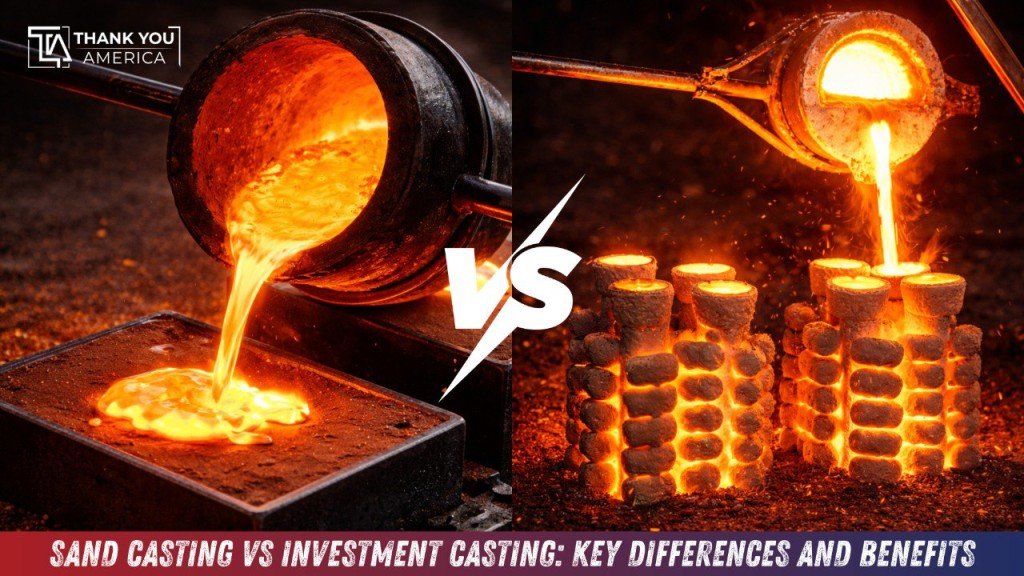
When choosing the right casting process for your project, understanding sand casting vs investment casting is essential. Both methods are widely used in industrial manufacturing, yet they differ significantly in cost, precision, material compatibility, and production volume.
At TYA.ONE, we work closely with OEMs and industrial buyers who often ask which process delivers better performance, tighter tolerances, or more cost-effective results. This detailed guide will help you clearly understand the differences, advantages, materials, and applications of both casting methods — so you can make an informed decision for your next project.
What Is Investment Casting?
Investment casting, also known as lost-wax casting, is a precision casting process used to manufacture complex and highly detailed metal components. The process begins with creating a wax pattern that mirrors the final part. This wax model is coated with a ceramic shell, heated to remove the wax, and then molten metal is poured into the cavity.
Because of its ability to produce intricate geometries and smooth surface finishes, investment casting is often used in aerospace, medical, automotive, and high-performance industrial components.
Why Manufacturers Prefer Investment Casting
- Excellent dimensional accuracy with minimal machining required
- Smooth surface finish compared to traditional casting methods
- Ability to produce complex internal features
- Suitable for high-performance alloys and tight tolerance parts
For companies requiring precision components, investment casting is often the preferred choice over sand casting.
What Is Sand Casting?
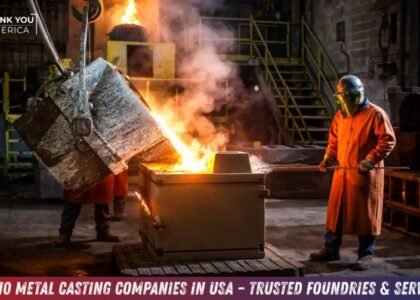
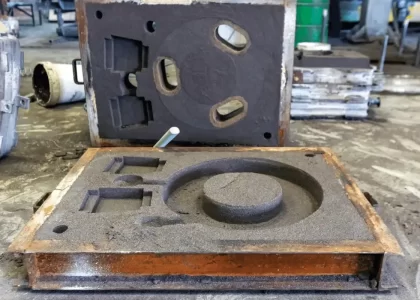
Sand casting is one of the oldest and most versatile metal casting processes. In this method, a mold is formed using sand mixed with binders. A pattern is pressed into the sand to create a cavity, molten metal is poured into it, and once solidified, the sand mold is broken away to reveal the casting.
Sand casting is widely used for large, heavy, or simple metal parts where ultra-fine precision is not critical.
Why Sand Casting Remains Popular
- Cost-effective tooling for low-volume production
- Ideal for large components
- Flexible for many metal types
- Lower initial investment compared to investment casting
When comparing sand casting vs investment casting, sand casting is often selected for heavy industrial components and lower production runs.
How Does Sand Casting vs Investment Casting Work?
Understanding the working process helps clarify why these two casting methods deliver different results.
Sand Casting Process
- A pattern of the part is created (usually wood or metal).
- Sand mixed with binding agents is packed around the pattern.
- The pattern is removed, leaving a cavity.
- Molten metal is poured into the mold.
- After cooling, the sand mold is broken to remove the part.
- Finishing and machining are performed if required.
This method is simpler and suitable for large or less detailed components.
Investment Casting Process
- Wax patterns are created using injection molds.
- Multiple wax patterns are assembled into a tree-like structure.
- The assembly is dipped into ceramic slurry and coated repeatedly.
- The wax is melted out (lost-wax process).
- Molten metal is poured into the ceramic mold.
- After cooling, the ceramic shell is broken off.
- Minimal finishing is required.
Because of its detailed mold formation, investment casting produces parts with better surface finish and dimensional precision.
Sand Casting vs Investment Casting: Key Differences (Comparison Table)
Below is a simplified comparison to help manufacturers quickly evaluate both methods:
| Feature | Sand Casting | Investment Casting | |
|---|---|---|---|
| Tooling Cost | Low initial tooling cost | Higher tooling investment | |
| Surface Finish | Rough, requires machining | Smooth, minimal finishing | |
| Dimensional Accuracy | Moderate | High precision | |
| Complexity of Parts | Simple to moderately complex | Highly complex geometries possible | |
| Production Volume | Suitable for small to medium runs | Best for medium to high volumes | |
| Size Capability | Ideal for large parts | Typically smaller to medium parts | |
| Tolerance Levels | ±0.5 mm or higher | Much tighter tolerances | |
| Post-Processing | Often required | Minimal machining needed |
When evaluating sand casting vs investment casting, the decision often depends on the balance between cost and precision.
Types of Metal Materials Used for Sand and Investment Casting
Both casting methods support a wide range of metals, but certain materials perform better in specific processes.
Common Materials Used
| Material | Sand Casting | Investment Casting |
| Carbon Steel | ✔ | ✔ |
| Stainless Steel | ✔ | ✔ (better finish) |
| Alloy Steel | ✔ | ✔ |
| Aluminum Alloys | ✔ | ✔ |
| Bronze | ✔ | ✔ |
| Brass | ✔ | ✔ |
| Cast Iron | ✔ (very common) | Limited use |
| Super Alloys | Rare | ✔ Preferred |
Investment casting is particularly effective for stainless steel, alloy steel, and high-performance materials. Sand casting is commonly used for cast iron and large aluminum components.
If your project requires steel casting services or aluminum casting services, choosing the right process ensures better mechanical performance and cost control.
Advantages of Investment Casting and Sand Casting
Instead of viewing sand casting vs investment casting as competitors, it’s more helpful to understand where each method excels.
Advantages of Investment Casting
- Produces near-net-shape components that reduce material waste and machining time
- Ideal for detailed parts with thin walls and internal cavities
- Provides superior surface finish, reducing finishing costs
- Supports high-strength alloys used in aerospace and automotive
- Enables consistent production quality for medium to high volumes
Advantages of Sand Casting
- More economical for large and heavy components
- Lower tooling costs make it suitable for prototypes
- Flexible design modifications during development stages
- Works well for cast iron and heavy-duty industrial parts
- Suitable for short production runs
The best choice depends on design complexity, required tolerances, and project budget.
Industry Applications: Where Each Casting Process Is Used
Different industries prefer different casting methods based on performance requirements.
Industries Using Investment Casting
- Aerospace components requiring tight tolerances
- Automotive precision engine parts
- Medical surgical instruments
- Defense and military components
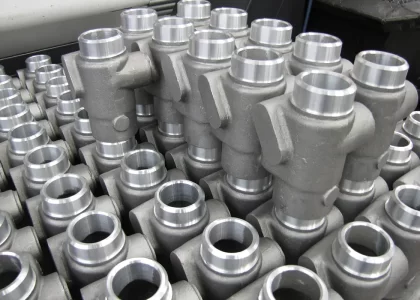
- Industrial pumps and valves
- Energy and turbine parts
Industries Using Sand Casting
- Construction equipment components
- Agricultural machinery
- Heavy industrial housings
- Pump and valve bodies
- Automotive engine blocks
- Large structural castings
As a trusted metal casting parts supplier, understanding these industry needs helps in selecting the right process for durability and cost efficiency.
Contact us today to get a quote and discuss your project.
Sand Casting vs Die Casting: How It Differs
While discussing types of metal casting processes, buyers often compare sand casting with die casting as well.
- Die casting uses permanent metal molds and is ideal for high-volume aluminum production.
- Sand casting uses disposable sand molds and is more flexible for large components.
- Die casting offers better surface finish but requires higher tooling investment.
However, when comparing sand casting vs investment casting, investment casting provides better precision without the extremely high tooling cost of die casting.
Cost Considerations: Which Process Is More Economical?
Cost depends on:
- Production volume
- Tooling investment
- Machining requirements
- Material selection
- Part complexity
For small batches and large components, sand casting is often more economical. For precision parts requiring minimal machining, investment casting may reduce total production cost despite higher tooling.
Working with experienced steel casting services or aluminum casting services providers helps in optimizing cost-performance balance.
How to Choose Between Sand Casting vs Investment Casting
Here are practical decision factors:
- Choose investment casting if your part requires tight tolerances, smooth finish, and complex geometry.
- Choose sand casting if the part is large, heavy, or cost-sensitive.
- Consider production volume and long-term scaling plans.
- Evaluate post-machining costs.
- Assess material compatibility.
When sourcing from a reliable metal casting parts supplier, you can also explore hybrid solutions based on your technical drawings.
Final Thoughts
Understanding sand casting vs investment casting is essential for manufacturers aiming to balance cost, precision, and performance. Sand casting is a reliable and economical choice for large or less complex components, while investment casting offers superior accuracy, smoother finishes, and greater design flexibility for intricate parts. Instead of selecting one process universally, the right decision depends on your product requirements, industry standards, and long-term production goals. At TYA.ONE, we support global OEMs with expert guidance across various types of metal casting processes, including comparisons like sand casting vs die casting, ensuring efficient, high-quality casting solutions that optimize both performance and cost.
Frequently Asked Questions
The main disadvantage of sand casting is lower dimensional accuracy and rough surface finish compared to precision methods. Parts often require additional machining and finishing, which can increase total production time and cost.
Investment casting uses a wax pattern. The wax model is created in the exact shape of the final part, then coated with ceramic material. The wax is melted out before pouring metal, which is why it is also called the lost-wax casting process.
Sand casting cost depends on part size, material, quantity, and machining needs. It is generally lower in tooling cost and more economical for large or low-volume parts. For project-based pricing, companies like TYA.ONE typically review drawings and material specs before giving an accurate quote.
Investment casting works best with metals that need precision and fine detail, such as:
- Stainless steel
- Alloy steel
- Aluminum alloys
- Bronze and brass
Super alloys (for aerospace and high-temperature use)
Investment casting should be used when you need high precision, complex shapes, thin walls, and smooth surface finish. It is ideal for aerospace, medical, valve, and high-performance industrial components where tight tolerances matter. Many OEM buyers work with suppliers like TYA.ONE when such precision parts are required.
Yes, investment casting usually has higher tooling and setup costs than sand casting. However, it can reduce machining and finishing work, which may lower the total cost for complex or high-precision parts. The right choice depends on design, volume, and tolerance requirements.