- +1 (281) 949-6123
- info@tya.one
- Houston, Texas

REVERSE ENGINEERING MANUFACTURER
Reverse Engineering Services in USA for Industrial Components
Are you looking to reverse engineer hardware, digitize products, or recreate industrial parts and components using laser or 3D scanning technology? TYA offers industrial reverse engineering services using advanced 3D laser scanners, FARO scanning systems, and CAD modeling tools to convert physical parts into precise, production-ready 3D CAD data.
As a leading reverse engineering services company in USA. TYA can generate detailed 3D models and engineering documentation for CNC machining, fabrication, 3D printing, and product development. Our reverse engineering capabilities allow OEMs and industrial clients to recreate legacy parts, improve design performance, and accelerate production.

Reverse Engineering Solutions
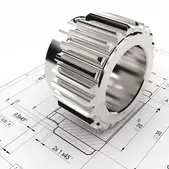
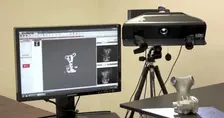
Reverse engineering is the process of extracting design, material, and manufacturing data from an existing component to recreate or improve it without original drawings. We Offer below 3D reverse engineering services
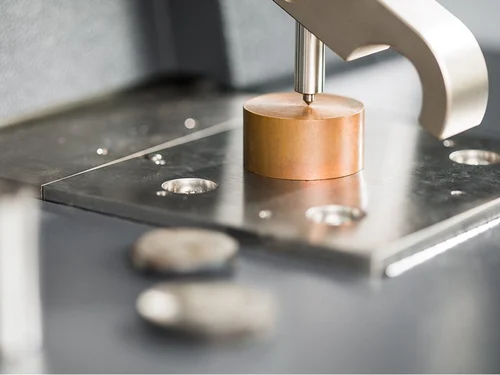
Metal and Alloys Testing
We are committed to providing precise analytical results by utilizing advanced testing, CNC machinery, and equipment. As a trusted reverse engineering company, we rely on experienced and qualified technical professionals to ensure accurate testing and analysis, fully conforming to international standards and industry norms.
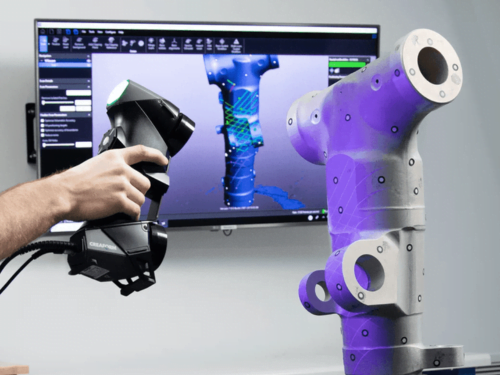
Part Scanning Services
We make it easy to turn your existing parts into accurate digital models. Using CMM inspection, 3D laser scanning, Leica 3D scanners, and CGI modeling, we provide reliable OEM part reverse engineering and 3D reverse engineering services. Whether you need to recreate, improve, or reproduce a component, we deliver precise models in your required format—ready for inspection, redesign, or manufacturing.
Drawing & Modeling Services
We have experience working with the latest engineering tools like CNC machining, 3D scanners for 3D printing, and technologies. We have the required skills to create relevant drawings and models required for the project in any desired format
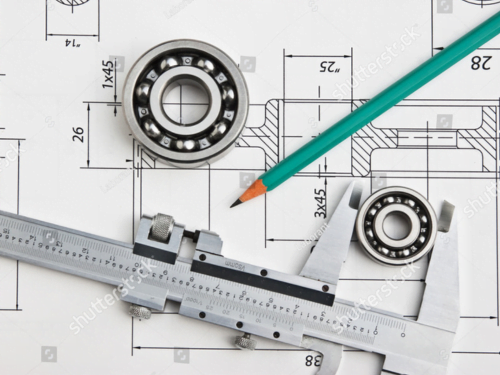
Quality Control Inspection
We provide structured inspection and validation to ensure every recreated component meets required tolerances and specifications. Our inspection programs support machine part reverse engineering by verifying dimensions, coatings, and functional parameters. Documentation and reports help maintain compliance with contractual and regulatory quality standards.
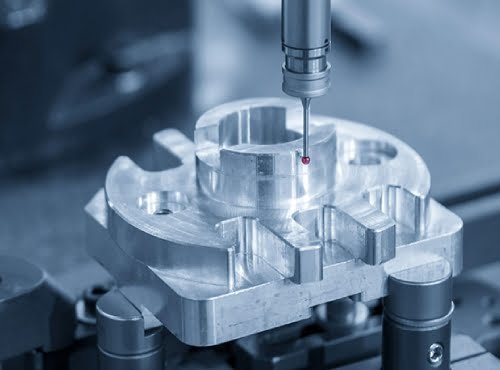
Reverse Engineering for Industrial Components
Reverse engineering is the process of extracting design, material, and manufacturing data from an existing component to recreate or improve it without original drawings.
1. Part Inspection & Requirement Study
We start with a detailed part inspection and requirement study to understand your component’s specifications. Our reverse engineering services ensure every part is analyzed for precise reconstruction.
2. 3D Scanning / Measurement
Using advanced 3D scanning and measurement tools, we capture every detail of your part. This step supports OEM part reverse engineering for accurate digital modeling.
3. CAD Model Reconstruction
Our team creates precise 3D CAD models from scanned data. These models can be used for redesign, simulation, or machine part reverse engineering in manufacturing and production.
4. Material & metallurgical analysis
We carefully analyze the material and metal composition of your parts to ensure they meet required standards. This helps provide accurate reverse engineering consulting and reliable part reproduction.
5. Prototype Manufacturing
We develop functional prototypes from reconstructed CAD models to validate design and fit. Prototypes help streamline engineering reverse services for final production.
We ensure strict dimensional accuracy and functional equivalence at every stage.
When Reverse Enginnering is Required !!
- Original Drawings are Unavailable
- OEM parts are discontinued
- Design improvements are required
- Cost reduction is needed
- Performance optimization is required
- Competitor product analysis is needed
- Legacy equipment needs replacement parts
- Failure analysis & root cause investigation
Specify Your Requirement
Get in touch with us for free quotes on reverse engineering and machining or other requirements. Share your ideas with our team—we're here to assist. Expect top-notch service, whether you're a newcomer or an experienced manufacturer.
Frequently Asked Questions
Reverse engineering is not always illegal, but it can become illegal when it violates copyright laws, software license agreements, patents, or trade secrets. For example, copying proprietary software code, bypassing security protections, or duplicating patented product designs without permission can break the law. In many countries, Reverse Engineering Services in USA are legal for research, interoperability, security testing, and education, but illegal for piracy, cloning products, or stealing intellectual property. The legality depends on purpose, method, and local laws related to intellectual property and software protection.
Many reverse engineering tools are used depending on whether the target is software, hardware, or mechanical parts. For software reverse engineering, common tools include disassemblers, decompilers, debuggers, and binary analysis tools. For product reverse engineering, engineers use 3D scanners, CAD software, coordinate measuring machines (CMM), and simulation software. Popular categories include reverse engineering software tools, code analysis tools, firmware analysis tools, and 3D reverse engineering tools used in manufacturing and product design.
The five common reverse engineering steps start with information collection, where the product or software is examined and data is gathered. Next is disassembly or deconstruction, where the system is taken apart physically or digitally. The third step is analysis, where each component, code block, or design element is studied to understand function and structure. The fourth step is modeling or documentation, where diagrams, CAD models, or code flow are recreated. The final step is reconstruction or improvement, where the design is rebuilt, modified, or optimized. These reverse engineering process steps are widely used in manufacturing, cybersecurity, and product development.
Reverse engineering is considered illegal when it is used to copy protected designs, break software licenses, bypass digital rights management (DRM), or steal confidential technology. Laws protect original creators through patents, copyrights, and trade secret regulations. If reverse engineering leads to unauthorized duplication or commercial misuse, it can result in legal penalties. However, ethical reverse engineering for compatibility testing, security research, and failure analysis is often allowed under fair use or specific legal exceptions.
There is no single mathematical reverse engineering formula, but the general concept can be expressed as: Final Product → Break Down → Analyze Components → Understand Design → Recreate Model. In engineering and manufacturing, this means measuring an existing object, extracting design parameters, and converting them into CAD data or technical specifications. In software reverse engineering, the “formula” is often binary code → disassembly → logic analysis → source-like representation.
The three main stages of reverse engineering are extraction, analysis, and reconstruction. In the extraction stage, data is collected from the product, code, or system using reverse engineering tools and measurement methods. In the analysis stage, engineers study the structure, behavior, and relationships between components. In the reconstruction stage, the design is recreated as documentation, schematics, CAD models, or rewritten code. These reverse engineering stages are commonly used in product redesign, legacy system migration, and competitive analysis.
Follow Us On Social Media :
Contact Us For More Info!
Thanks to our digital infrastructure, Houston Texas based organization Thank You America LLC has helped numerous companies automate their custom part sourcing processes.
We're committed to quality and customer satisfaction, ensuring rapid delivery of precision parts. Our goal? Speeding up your journey from prototyping to product launch